Finding Your Harmony
Adaptive Music Lessons & Music Therapy
‘Music lessons’ is a term most people are familiar with. Even if you’re unsure exactly what music lessons look like, most people assume they involve learning how to play an instrument. But, what are ‘Adaptive Music Lessons’ led by a Certified Music Therapist, and what is ‘Music Therapy’? How do these differ from typical music lessons and who do they benefit? If you’re wondering these same questions, you’ve come to the right place!
Our team of Certified Music Therapists and Registered Psychotherapists (Qualifying Members), specialize in adaptive music lessons, music therapy, and music psychotherapy. Each of our therapists bring their own unique skill sets to their sessions regardless of whether they’re facilitating adaptive lessons or therapy. The ways in which we use our skills though differs depending on the modality and goals being focused on.
Adaptive Music Lessons
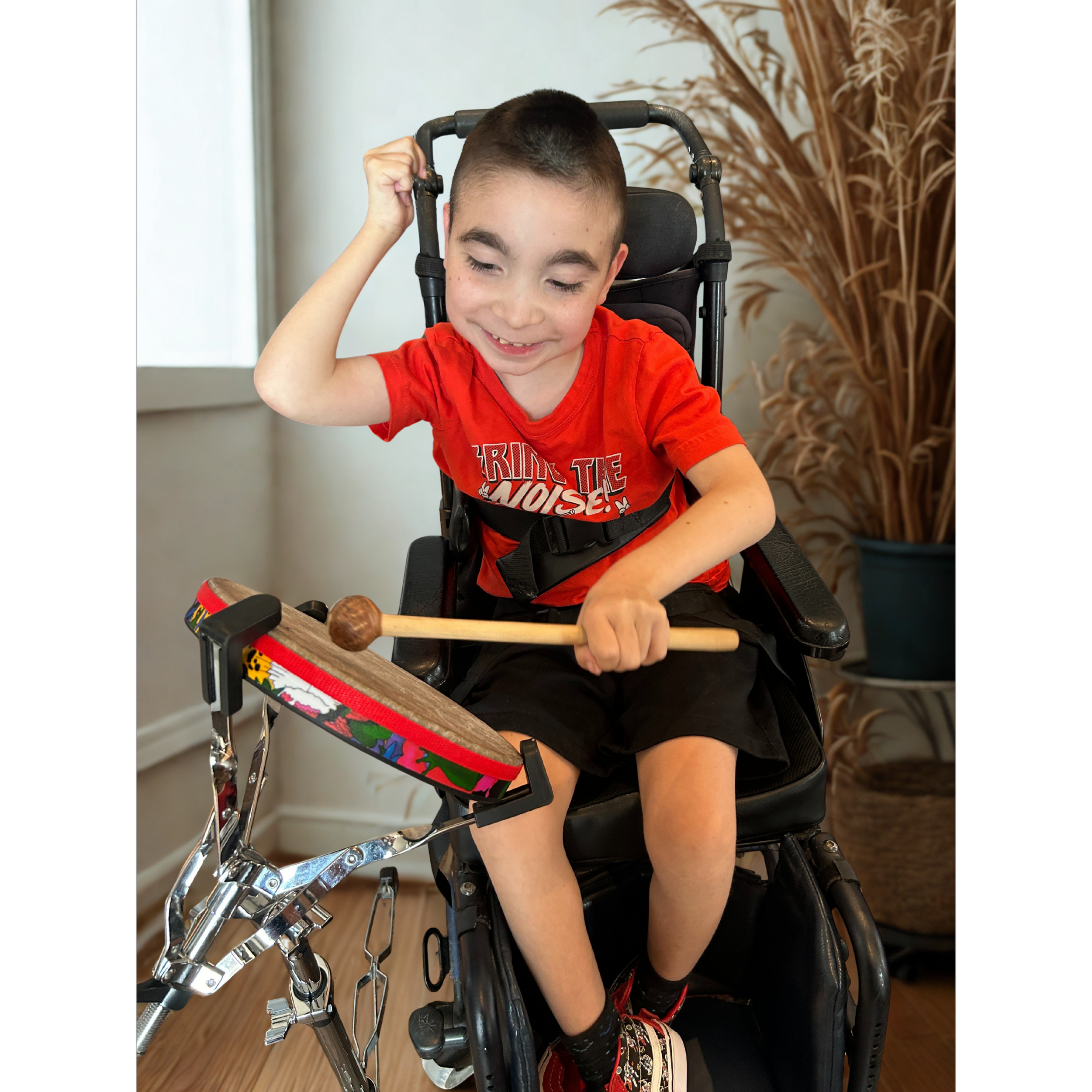
Adaptive music lessons are a service we provide to people of all ages and all abilities. All of our adaptive lessons are led by Certified Music Therapists (MTAs - Music Therapist Accredited, granted by the Canadian Association of Music Therapists). From toddlers through to seniors, adaptive music lessons are a fun, recreational way to enjoy music while working on a variety of skills. These sessions can be done individually or in groups and involve active music making by the therapist and the client(s), in a supportive and safe environment. Sessions begin with assessing the client(s) to determine their strengths, interests, and potential goal areas. While some clients have a specific instrument in mind that they want to focus on, such as piano or guitar, others prefer to explore a wide range of instruments from session to session.
To participate in adaptive music lessons, you do not need to know how to read music or how to play an instrument - you simply need to have an enjoyment of music. Having the adaptive lessons led by an MTA ensures that all of a person’s strengths and needs are being taken into account and mindful accommodations are made to promote independence and autonomy. This makes adaptive lessons a perfect option for those of any age or ability.
Maybe you have a child with ADHD who struggles to focus and stay seated for extended periods of time; maybe you support an individual with an intellectual disability that struggles to read and visually track; or maybe you are a senior with limited mobility. In our adaptive lessons, we find ways to embrace and utilize the strengths each person has, while working to eliminate barriers that would be faced in typical music lessons.
Similarly, adaptive lessons that focus on exploring a wide range of instruments across sessions can also incorporate accommodations. As these sessions have less of a focus on learning one specific instrument, they tend to focus on musical exploration, exposure, singing, and other aspects of music, including rhythm, tempo, and dynamics.
Whichever your music education desires are, our team customizes each lesson specifically to what you need for success, focusing on the most important elements to you.
Music Therapy
Music therapy sessions are also a service we provide to people of all ages and abilities. Humans are innately musical, from our breathing and heart beat to our vocalizations. Music therapy harnesses the elements of music to support individuals’ emotional, social, and spiritual wellbeing, through a therapeutic relationship. Similar to adaptive lessons, music therapy sessions can be done individually or in groups, and can focus on active music making and receptive music experiences.
Music therapy sessions are also led by MTAs, who have been trained to know how to use music safely and ethically, while achieving a variety of goals in areas such as verbal and non-verbal communication, cognitive functioning, fine and gross motor skills, musical skills, emotional regulation and well-being, and social skills. If you’re wondering how music could be unsafe or used unethically, stay tuned for our future blog post that discusses just that.
As with adaptive lessons, you do not need to have any musical knowledge or skills to participate in music therapy. Rather, music is used as the medium to help achieve (primarily) non-musical goals. Similarly, for instance, to how drawing is used in art therapy as a medium to express oneself as opposed to learning how to draw.
CMT specializes in music therapy with neurodivergent individuals, those with differences in cognition (Autism, developmental or intellectual delays, memory care, mental wellness, etc.), and challenging behaviours. By combining the principles of behaviour therapy, using a music therapy approach and perspective, we often work on goals including: communication, cognition, emotional, and social skills.
When working on verbal communication in sessions, we may utilize singing combined with intrinsic aspects of rhythm and cadence to practice simple sounds, such as ‘ah’ or ‘ou’, or we could be focusing on practicing speaking common phrases needed in every day life. Working on non-verbal communication may look like practicing using PECS (picture exchange communication system) or AAC (augmented and adaptive communication) devices to communicate, increasing eye contact, or learning to read body language.
A focus on cognition in music therapy sessions could have our team incorporate working on many skills including short term, long term, and working memory; early learning skills such as letters, numbers, fluency, and visual tracking; awareness and orientation to time and place; flexibility; problem solving; organization; transitions including mental and physical; and focus/attention.
Goal areas centred on emotional well being in music therapy sessions may target self-expression, self-regulation, self-esteem, confidence, relaxation, improving mood/mood management, decreasing stress, and promoting empowerment. When working on emotional well being, there is often also a focus on self-awareness and reflection. Elements of music most commonly used when working on emotional skills include song writing, improvisation, active music-making, lyric analysis, and receptive music experiences.
Social skills are often a goal we prioritize in our sessions, regardless of the person’s age. Some examples including young children just learning to navigate the social world (focusing on eye contact, turn taking, sharing, personal space, appropriate play, etc); teenagers experiencing social difficulties (building positive social relationships, promoting positive self-expression, connecting with others, working collaboratively and productively as a group, disagreeing with peers, etc); adults struggling with relationships or the demands of social life (learning coping strategies for social situations, taking initiative, positive communication, etc); or seniors facing isolation (meaningful social engagement, participating in a group experience, etc).
Again, like with adaptive music lessons led by an MTA, when facilitating music therapy sessions, we embrace and call on the strengths of each person to achieve their goals.
In addition to active music therapy, receptive music therapy, and improvisational music therapy, there are other sub-types or specialities within music therapy. These include The Bonny Method of Guided Imagery and Music (GIM), Neurologic Music Therapy (NMT), and Music Psychotherapy (or, music therapy as a form of psychotherapy).
Connections Music Therapy’s founder and lead music therapist, Jess (they/them), is certified in Neurologic Music Therapy. NMT specializes in research-based interventions that focus on brain function and how to harness the brain’s natural predisposition for music to enhance executive functioning in those who are neurodivergent and rehabilitate damaged brain areas caused by stroke, Parkinson’s disease, or traumatic brain injury.
CMT therapists Jillian (she/her), Kylie (she/her), and Skylar (they/them) are all qualifying members of the College of Registered Psychotherapists of Ontario, and are able to practice Music Psychotherapy. This sub-type combines psychological theories with musical interventions to treat mental, emotional, and behavioural challenges.
Whether you’re looking to learn an instrument, looking for a different approach to mental wellness, or looking to expand your non-musical skills, Connections Music Therapy will customize a treatment plan just for you following our comprehensive assessment.
Looking to get started or learn more on how we can help you thrive?
Want to avoid going flat?
Stay sharp and join our mailing list for monthly updates, special events with CMT and in the community, and be the first to know of new programs we’re launching!